


The connection between IQ, EQ & SQ

The above model is a combination of Maslow's Hierarchy of Needs and Csikszentmihalyi's model of optimum flow. The Cognitive Principle Matrix shows how IQ, EQ & SQ are used to link Maslow's Hierarchy of needs. In the chart IQ equals Behavioral and EQ equals Personal. Where both are present the dominant IQ or EQ will be shown on top of the other. As support and challenge rise, greater levels of flow are achieved. At the bottom left you are in the depression phase and at the top right you are in the joyful phase. The particular SQ, is used to take you to the next support level across the chart. For example, forgiveness will move you from negative and personal to negative and behavioral, because you have forgiven the person and then can deal with their behavior.
A more straight forward link is shown below:
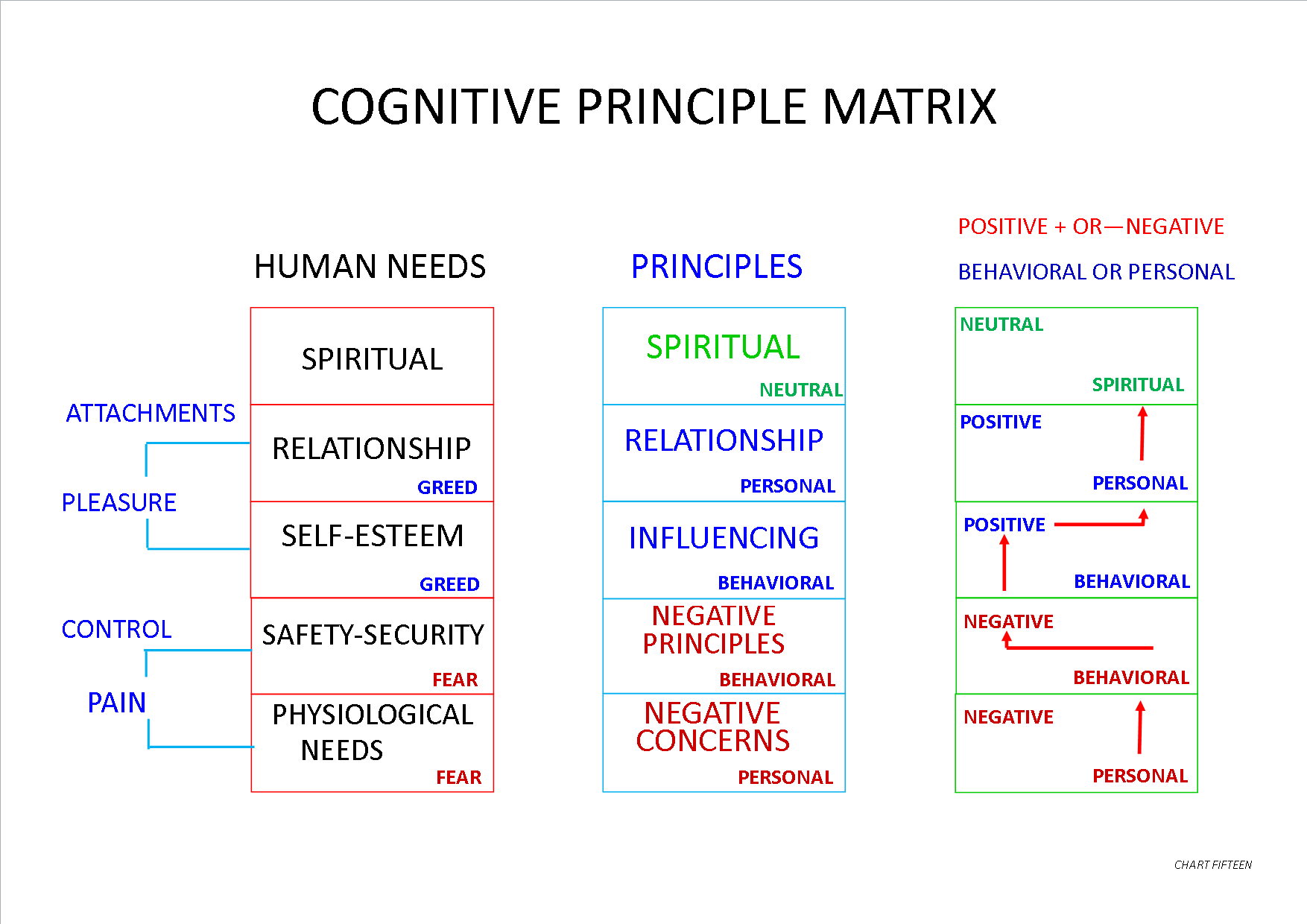
In the Cognitive Principle Matrix there are eight truths which support the above chart. In the main IQ, EQ, SQ chart shown above, I look at one of those truths, namely, Support versus Challenge
In Support versus Challenge, the truth is:
Emotional Support: [EQ]
Emotional balance is where there is both support and challenge. Eg.
Trust-Fear: Respect-Anger: Acceptance-Critical: Commitment-Guilt
The negative principles are shown in italics. These negative principles are just as valuable to us as our positive principles. eg. If we face a lion with all trust and no fear, then we are dead.
If we get too much challenge then fear overrides trust and we develop negative concerns which starts the rumination cycle of:
Concern-rumination-blame, which creates negative energy and turns fear into paranoid fear. It becomes personal and the next cycle is:
Failure-Shame-Blame-Avoid.
If support equals challenge then the best outcome is achieved, because the cycle is:
Influence-Positive thinking-Commitment, which generates positive energy and turns trust into commitment and you stay balanced in the same zone or on same the level. A negative trigger is not taken personally, but treated behaviorally, and the cycle is:
Mistake-Guilt-Commitment [fix the problem]
If we receive too much support then we get out of balance because it becomes about getting my needs meet and less consideration for others. The false positive [shown in italics] cause the following outcomes:
Trust-Fantasy: Respect-Pride: Acceptance-Greed: Commitment-Self-centered.
This can lead avoidance, stubbornness, and or narcissism.
Cognitive Support: [IQ]
Cognitively, the balance of support and challenge provides for sustained growth because both growth and risk are assessed in advanced.
If cognitive challenge is developed in the planning stage of goal setting then this will take in to account of the potential risk which may arise, which will help create and environment for flow. Examples of cognitive support and challenge are shown in the chart below:
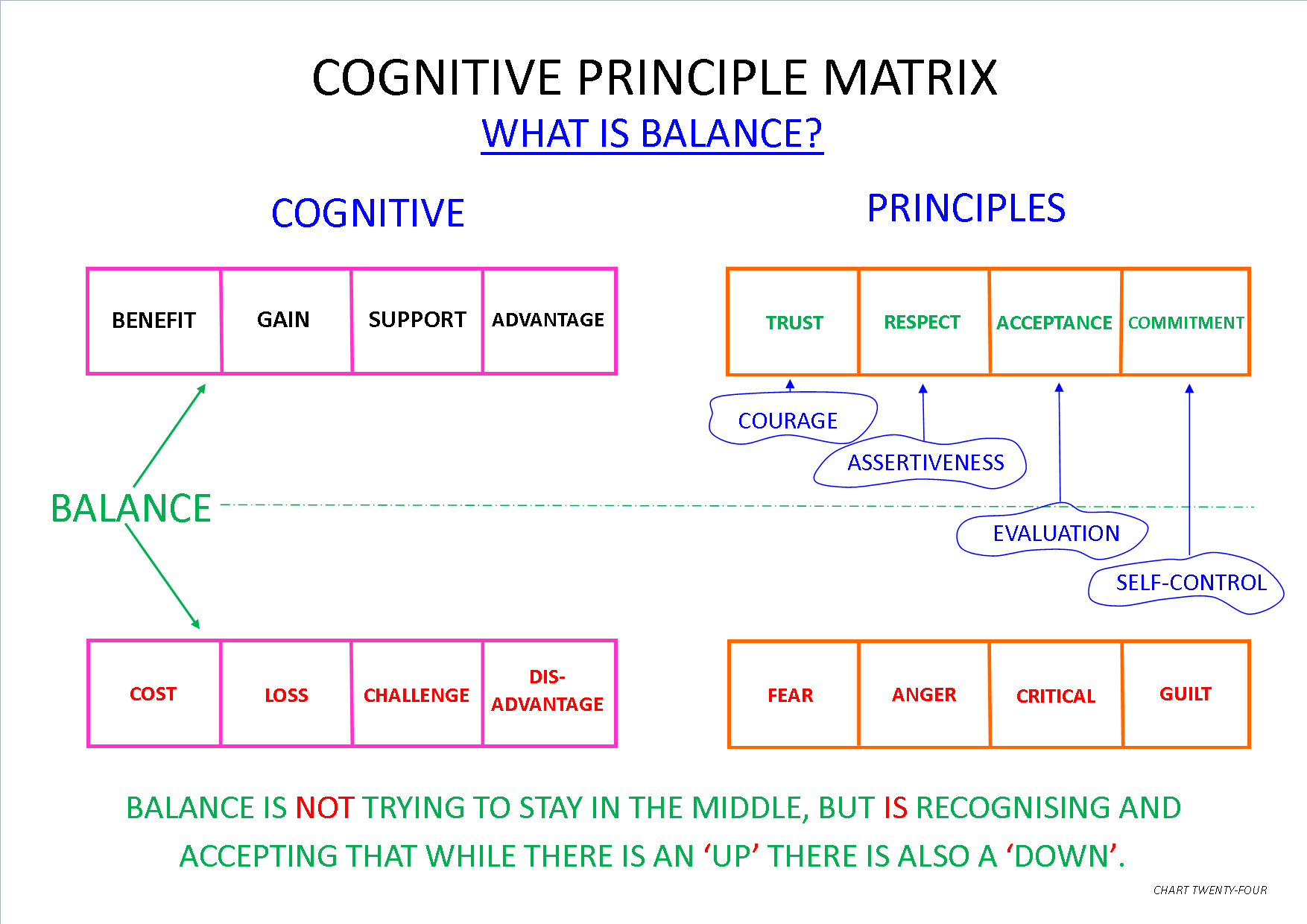
It is normal practice, when developing a plan, cognitively you assess risk [challenge] and provide a strategy to return to balance. Emotionally, you should be doing the same and plan how to get back into balance.
Comment: We are now witnessing weakness in businesses caused by technology disruption and digital disruption. There is support and challenge for the technical aspects of the implementation, but too little support for the emotional needs of people who have to deal with the disruption, which creates negative concerns and resistance and slows the implementation process.
Spiritual support [SQ]
The purpose of spiritual intelligence is to rise above our human nature when the challenge overwhelms us.
At the basic level we have needs and wants. This is built into our human nature and drives our comparative thinking [IQ]. When we achieve our wants and needs, we want more. However, if we consistently fail to get our needs and wants met then we develop negative comparative thinking, resulting in negative feelings [EQ]
To control our human nature we have a conscience which controls how we get our needs and wants met. Out of our conscience grows our principles of trust, respect, acceptance, etc. Therefore, at the basic level of human behavior there are two opposing forces at work in negative situations, namely, comparative thinking and principle thinking.
In cognitive principle theory the two highest principles are unconditional acceptance and unconditional giving, which are the direct opposites of comparative thinking related to achieving goals. Goals are based on a comparison between “where I am” and “where I want to be”. Goals are driven by fear of a bad goal and greed for a good goal. Unconditional acceptance is self acceptance of strengths and weaknesses and there is no goal, so we overcome our fear. Unconditional giving is where you give without wanting anything back and there is no goal, so we overcome our greed.
By giving into negative thinking you weaken yourself. Spiritual principles are available to us to overcome our human nature weakness.
We have spoken about two of them, namely unconditional acceptance and unconditional giving.
If you get caught up in too much challenge through negative thinking, then switch to the spiritual principle of suffering:
Suffer and grow courage, patience, self control. Don’t use negative comparative thinking to suffer and blame yourself, others or circumstances.
If you do blame others or yourself, then use the spiritual principle of forgiveness. That is, split the person from their behavior and forgive the person, but put the behavior aside to be dealt with by god, karma or what ever else you believe in.
If you can't achieve your goal, then use the spiritual principle of hope. A goal requires a pathway leading to an outcome, whereas hope requires no pathway, just trust in your intuition that you will achieve the outcome you desire and the pathway will be shown to you.
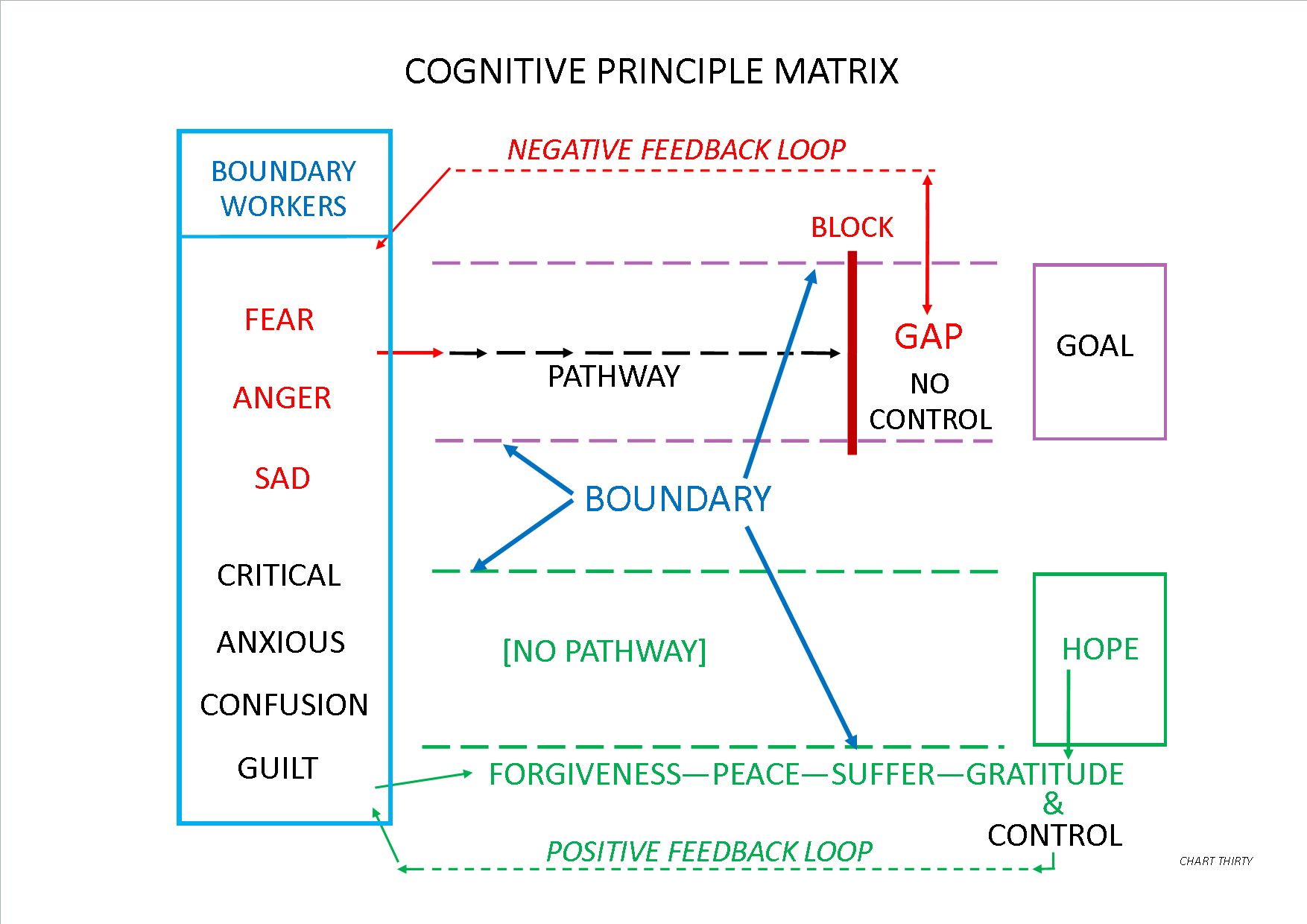
The five levels in the Cognitive Principle Matrix which make the connection between the IQ, EQ & SQ are:
Spiritual principle to use to move to the next level is show in brackets [ ]
Level 5 Spiritual principles – [Love, peace and joy.] SQ
Level 4 - Relationship principles [Unconditional giving] EQ
-positive and personal
Level 3 - Self-esteem using Influencing principles [Unconditional acceptance]
-positive and behavioral IQ
Level 2 - Negative principles [Peace & Suffering]
- negative and behavioral IQ/EQ
Level 1 - Negative concerns [Hope & Forgiveness]
- negative and personal EQ/IQ
You won’t get to level 5 unless you master the use of the spiritual principles at levels 1-4.

